LoRA AI
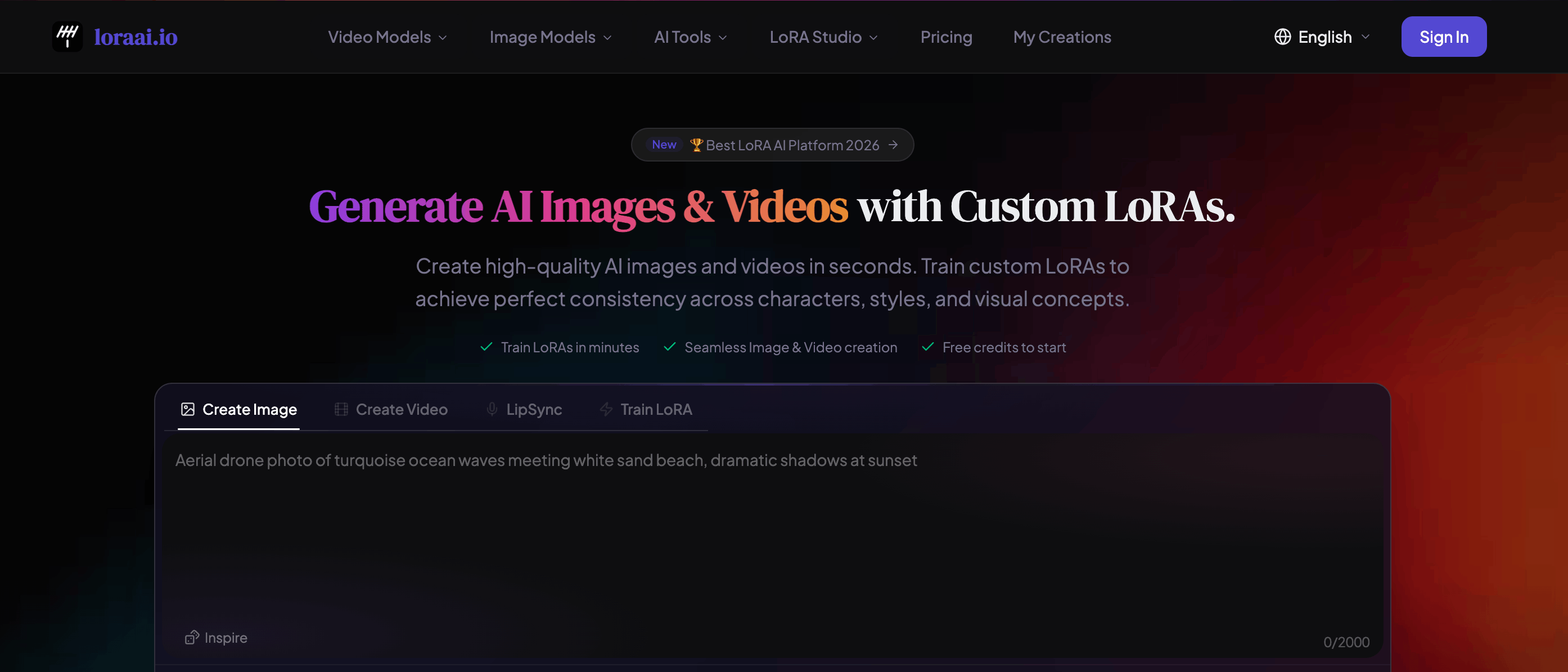
« Train custom LoRAs and generate consistent AI images and videos from them. »
LoRA AI: Custom-Trained AI Image and Video Generation
LoRA AI, found at loraai.io, is an AI platform built around a specific technical capability: letting users train their own custom LoRAs (Low-Rank Adaptations) and use them to generate AI images and videos with consistent characters, styles, and visual concepts. Where many AI image generators rely purely on a general-purpose model and a text prompt, LoRA AI gives users a way to fine-tune generation toward a specific look, face, or style that stays consistent across many outputs.
This focus on consistency is aimed at a common pain point in AI image generation: getting the same character, brand style, or visual theme to reappear reliably across multiple generations, rather than getting a slightly different interpretation every time.
Core Features
Custom LoRA Training
LoRA AI lets users train their own LoRA models in minutes, a process that traditionally required technical machine learning knowledge, and apply that trained LoRA to future generations so a specific character, subject, or style stays consistent across images and videos.
AI Image and Video Generation
Beyond LoRA training, the platform supports general AI image and video generation, letting users create high-quality visuals in seconds using both custom-trained LoRAs and the platform's built-in models.
Access to Leading Models
LoRA AI gives users access to a range of current AI models for image and video generation, including options for both unlimited generation on paid tiers and fast, few-second generation speeds.
Video Models
Alongside its image and LoRA tools, the platform organizes its offering around dedicated sections for video models, image models, AI tools, and a LoRA Studio for managing trained models.
Pricing
LoRA AI follows a freemium structure, with a subscription tier (referred to on the site as "Studio" subscribers) unlocking unlimited access to certain premium models. The platform lets users try core generation features before committing to a paid subscription.
Who Uses LoRA AI?
LoRA AI is aimed at creators who need repeatable, consistent visuals, such as illustrators developing a recurring character, brands wanting a consistent mascot or style across marketing images, and hobbyists who want to generate a consistent version of themselves or a fictional character across many different scenes and poses.
Frequently Asked Questions
What is a LoRA in AI image generation?
A LoRA (Low-Rank Adaptation) is a lightweight, custom-trained addition to an AI model that lets it consistently reproduce a specific character, style, or subject across generations, rather than producing a different interpretation each time.
Is LoRA AI free to use?
LoRA AI offers a freemium model, letting users try image and video generation before upgrading to a Studio subscription for unlimited access to premium models.
Do I need technical machine learning experience to train a LoRA?
No. LoRA AI is designed to let users train custom LoRAs in minutes through its Studio interface, without requiring a background in machine learning.
Can LoRA AI generate videos as well as images?
Yes. LoRA AI supports video generation in addition to image generation, letting users apply the same consistency approach to both formats.
What can I use a custom LoRA for?
Custom LoRAs are commonly used to keep a specific character, face, or visual style consistent across many generated images or videos, which is useful for storytelling, branding, and personal projects.
How fast is generation on LoRA AI?
LoRA AI advertises generation speeds of around four seconds for new content, depending on the model and subscription tier being used.
Why Consistency Is a Big Deal in AI Generation
One of the most common frustrations with general-purpose AI image generators is drift: ask for the same character in ten different scenes, and a standard model will often produce ten subtly (or not so subtly) different-looking versions of that character. For storytelling, comics, branded content, or any project that spans multiple images, that inconsistency can be a serious blocker, forcing creators to manually cherry-pick and edit results until they look like the same subject.
LoRA-based fine-tuning solves this by letting a model "learn" a specific subject, face, or style from a small set of reference images, then apply that learned pattern to new generations going forward. Historically, this kind of fine-tuning required real machine learning expertise and infrastructure. By packaging LoRA training into a simple, minutes-long workflow, LoRA AI brings that capability to creators who don't have a technical background, without needing to set up their own training pipeline.
How is training a LoRA different from just writing a detailed prompt?
A detailed text prompt can describe a character's features, but a general-purpose model still generates a fresh interpretation of that description each time. A trained LoRA instead encodes the actual visual patterns of a specific subject, so the same face, style, or object can reappear reliably across dozens of different generations and scenes.
For comic creators, this means a protagonist can appear across an entire storyline with a consistent face and outfit. For brands, it means a mascot or spokesperson character can be reused across dozens of marketing images without needing to hire an illustrator to redraw it each time. And for individual hobbyists, it opens the door to generating a consistent, personalized version of themselves or an original character in endless new scenes and styles.
Because LoRA AI extends this same consistency approach to video generation, trained characters or styles can also carry over into short video clips, which is a much less common capability among consumer-facing AI generation tools that typically treat image and video as entirely separate products.
That combination of accessible LoRA training and cross-format consistency is what sets LoRA AI apart from generators that only offer one-off, single-image outputs without any way to carry a look forward into future generations.
For creators who have struggled with inconsistent AI-generated characters in the past, this kind of tool can meaningfully cut down the time spent regenerating and cherry-picking results to find a usable match.
That efficiency gain is a major reason LoRA-based platforms have grown popular among more serious AI content creators.
It also lowers the barrier for smaller studios and independent creators to compete with larger teams on visual consistency.
« Browse AI image prompts and generate your own with GPT Image 2 and Nano Banana. »
Free Trial« Free AI image generator powered by FLUX and Stable Diffusion, no sign-up needed. »
Free Trial« Free AI image-to-image generator for turning your photos into new styles. »
Free Trial« Private, uncensored AI image generation and chat with no account required »